
Vegan Kombucha Contract Manufacturing in Sri Lanka: Glass Line
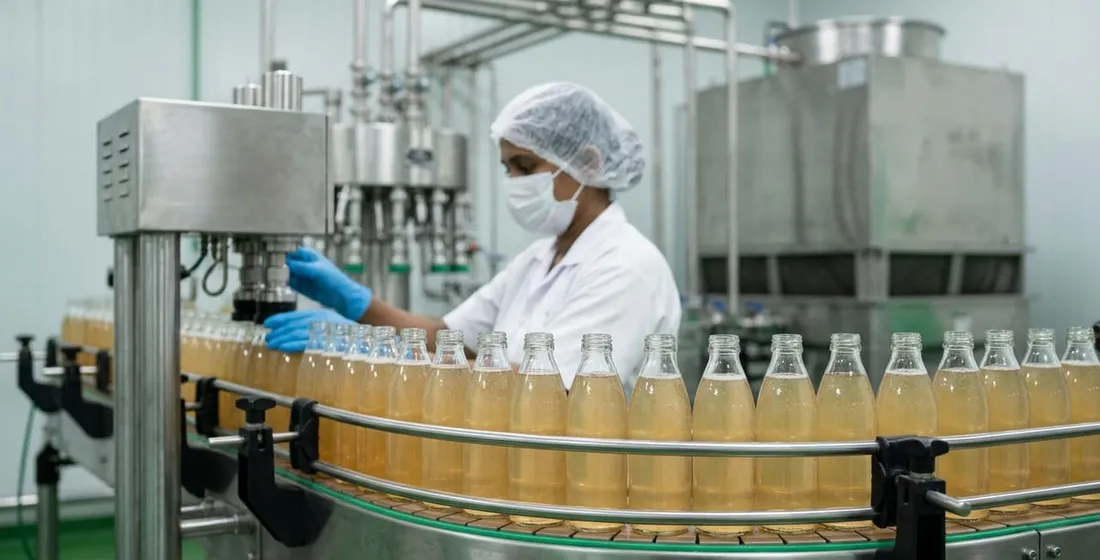

Contract manufacturing vegan kombucha on a glass-bottle beverage line in Sri Lanka
Buyer's snapshot • Sri Lanka's non-alcoholic beverage market is projected to reach about US$ 3.21 billion in 2025, growing close to 13.6% a year through 2029 (Statista, 2025), and the fastest-moving slice is low-sugar functional drinks. • Kombucha sits in that slice, but it carries one rule no other soft drink does: keep it under 0.5% alcohol by volume or it stops being a soft drink in the eyes of the regulator. • Silk Foods Ceylon (SFC) bottles vegan kombucha on a glass-bottle beverage line in Matale at up to 2,500 × 200 ml bottles a day, first-run MOQ 1,250 bottles, on a BRCGS- and FSSC 22000 V6-audited cert stack. • The decision table below shows the live-culture versus flash-pasteurised choice that sets your shelf life, your cold chain, and your label claim. |
Sri Lanka’s beverage shelf is splitting in two. Concentrates and sugary carbonates have stalled under affordability pressure, while low-sugar functional drinks, coconut water, herbal infusions, and fermented teas are the categories pulling new spend. The global kombucha market alone was valued at about US$ 3.25 billion in 2025 and is forecast to grow at roughly 13.9% a year to 2030 (Mordor Intelligence, 2025).
For a local FMCG brand, kombucha looks like an easy entry: tea, sugar, a live culture, a bottle. The hard part is not the recipe. It is bottling a living, fermenting product to a fixed specification, batch after batch, without it drifting over the line that turns a wellness drink into a licensed alcoholic beverage. That is a contract-manufacturing problem before it is a branding one.
What does it take to contract manufacture kombucha in Sri Lanka?
Kombucha is sweetened tea fermented by a symbiotic culture of bacteria and yeast. The yeast converts sugar to alcohol, then acetic acid bacteria convert that alcohol to acids, which is what gives the drink its tartness and its low pH (Journal of Food Science, Miranda et al., 2022). Contract manufacturing at Silk Foods Ceylon means a brand brings the recipe and the manufacturer runs it at scale, with the line, the audit, and the regulatory submission moving under the manufacturer’s roof.
For kombucha that scope is wider than for a still juice. The manufacturer has to control the live fermentation to a target acidity and alcohol level, hold the pH at or below 4.2 so no pathogen can grow, fill into a pressure-tolerant bottle, and decide whether the product ships alive or pasteurised. A working home-brew recipe rarely arrives ready for that. The same questions sit behind any plant-based and vegan contract manufacturing brief, the kitchen version works, but it has not been held to a fixed spec at 1,250 bottles.
The 0.5% ABV decision: live-culture or flash-pasteurised?
Commercial kombucha is held under 0.5% alcohol by volume; above that threshold it is regulated as an alcoholic beverage in most markets, which changes the licence, the tax, and the channel entirely (Journal of Food Science, 2022). Unpasteurised kombucha keeps fermenting in the bottle and can climb past 0.5% if it warms up in transit or on a shelf. So the first thing a kombucha brand decides with its manufacturer is not flavour. It is whether the product ships alive or heat-treated.
A live-culture kombucha keeps its probiotics and its category story, but it commits the brand to a refrigerated cold chain from the line to the fridge, and to acidity and alcohol testing on every batch. A flash-pasteurised kombucha, heated briefly to disable the yeast, becomes shelf-stable and travels through ambient distribution like any other bottled drink, at the cost of the live-probiotic claim. Neither is wrong. They are different products with different channels.
The R&D team at the Matale facility sees the same gap in most first kombucha briefs. The home-brew tastes right at week one, but it has not been stabilised: the brand has not fixed a fermentation end-point, a target titratable acidity, or a plan for what the alcohol reading does after capping. Locking those before the first commercial run is the difference between a clean SLSI submission and a recall risk. That is the work R&D and NPD (Co-Development on the SFC brochure) does in two to four sample iterations before a recipe goes to the line, the same loop covered in the retort-ready vegan format R&D iteration cycle.
Live-culture versus flash-pasteurised kombucha: the contract-manufacturing decision
| Decision factor | Live-culture (refrigerated) | Flash-pasteurised (shelf-stable) |
|---|---|---|
| Alcohol control | Tested every batch; risk of post-bottling drift above 0.5% | Locked at pasteurisation; no further fermentation |
| Probiotic claim | Live cultures retained | Probiotics killed; no live claim |
| Distribution | Cold chain, fridge to fridge | Ambient, like any bottled drink |
| Shelf life | Weeks, refrigerated | Months, ambient |
| Best channel fit | Premium grocery, cafe, HORECA chiller | General trade, e-commerce, wider retail |
| Regulatory load | Higher (batch ABV and acidity records) | Lower (single validated heat step) |
Why a glass-bottle line, not PET
Silk Foods Ceylon runs a dedicated glass-bottle beverage line in Matale built around a liquid filling machine, a glass-bottle capping machine, and a water cooling tower, with a retort and pasteurisation step available on the adjacent non-dairy line. The standard beverage format is a 200 ml glass bottle, and the line fills up to 2,500 bottles a day with a first-run MOQ of 1,250 bottles. Vegan Kombucha in Classic and Mint Chocolate already sits in the SFC ready-to-go portfolio, so a brand can private-label an existing formulation or contract-manufacture its own.
Glass earns its place on a kombucha line for reasons PET cannot match. A fermenting drink builds carbonation, and glass holds that pressure and that fizz without the slow gas loss of plastic. Glass is inert against the drink’s low pH, so nothing migrates into an acidic product over a months-long shelf life. And glass carries the premium, natural cue that the functional-drink shopper is paying for. The trade-off is weight and cold-chain handling, which is exactly why the live-versus-pasteurised decision above has to be made before packaging is locked.
Service snapshot: contract manufacturing kombucha at Silk Foods Ceylon Format: 200 ml glass bottle, capped, single-serve Line capacity: up to 2,500 bottles per day on the glass beverage line First-run MOQ: 1,250 bottles per SKU Lead time: 2 to 4 weeks on a locked recipe; 6 to 10 weeks if R&D stabilisation is needed first Cert coverage: BRCGS- and FSSC 22000 V6-audited, with SLSI clearance and Sri Lanka Food Act compliance on every retail SKU Portfolio: Vegan Kombucha (Classic, Mint Chocolate) available to private-label, or contract-manufacture a custom recipe |
Running a second or third beverage SKU does not mean re-auditing the manufacturer. The cellular-manufacturing layout carries more than 50 ready-to-go SKUs on a single BRCGS and FSSC 22000 V6 audit, so a kombucha range can scale flavours on the same cert stack, the same logic a brand uses when it moves from a first commercial plant-based patty run into a second format.
What SLSI and the Food Act ask of a bottled kombucha
Any packaged kombucha sold through Sri Lankan organised retail needs SLSI clearance, and its label must meet the Ministry of Health Food (Labeling and Advertising) Regulations 2022, in force since 1 January 2024 (Ministry of Health, 2022). The regulations require the common product name in bold across all three languages, English, Sinhala, and Tamil, plus net volume, full ingredient and allergen declarations, and packer details. SLSI also maintains beverage standards that a bottled product is measured against (SLSI, 2022).
Two points catch first-time kombucha brands. The label has to state what the product is in plain tri-lingual terms, which means a decision on whether the word fermented appears and how the live or pasteurised status is described. And because kombucha sits near the alcohol line, the alcohol-by-volume figure on file matters: a batch record showing a controlled sub-0.5% reading is what keeps the product classified as a soft drink. SLSI submission support sits inside a standard SFC contract-manufacturing engagement, and the wider cert picture is mapped in the certification stack for a Sri Lankan FMCG launch. Planning the six-week submission buffer onto the calendar matters more than any single line in the file.
Frequently asked questions
Does Silk Foods Ceylon offer contract manufacturing for vegan kombucha?
Yes. Silk Foods Ceylon contract-manufactures vegan kombucha on a glass-bottle beverage line in Matale, filling 200 ml bottles at up to 2,500 a day with a first-run MOQ of 1,250 bottles. Vegan Kombucha in Classic and Mint Chocolate is also available to private-label from the existing SFC portfolio.
What is the MOQ for a kombucha SKU at Silk Foods Ceylon?
The first-run minimum for a beverage SKU on the 200 ml glass line is 1,250 bottles, deliberately set for a local brand’s first commercial run rather than export-scale volume. Lead time runs 2 to 4 weeks once a recipe is locked, or 6 to 10 weeks if R&D stabilisation is needed first.
Should my kombucha be live-culture or pasteurised?
It depends on the channel. Live-culture keeps the probiotic claim but needs a refrigerated cold chain and batch-by-batch alcohol testing to stay under 0.5% ABV. Flash-pasteurisation makes the drink shelf-stable for general trade and e-commerce, but ends the live-probiotic claim. The recipe is stabilised for whichever route the brand picks.
What certifications does a bottled kombucha need in Sri Lanka?
For the organised retail shelf, a kombucha needs SLSI clearance and a label that meets the Ministry of Health Food (Labeling and Advertising) Regulations 2022, including tri-lingual naming, net volume, and allergen declarations. The SFC line adds BRCGS and FSSC 22000 V6 audit coverage, which retail procurement increasingly asks of the manufacturer.
How Silk Foods Ceylon can help
For local FMCG brands moving a fermented-drink concept from kitchen to professional production, Silk Foods Ceylon (SFC) runs a glass-bottle beverage line in Matale that fills 200 ml bottles at up to 2,500 a day, with a first-run MOQ of 1,250 bottles and Vegan Kombucha already in the 50+ ready-to-go SKU portfolio. The in-house R&D team stabilises the fermentation end-point, the sub-0.5% alcohol target, and the live-or-pasteurised decision before the first commercial batch, so the SLSI submission is clean. Every retail SKU runs under a BRCGS- and FSSC 22000 V6-audited cert stack with SLSI clearance and Sri Lanka Food Act compliance built into the engagement, and a second or third flavour scales on the same audit.
To brief a kombucha or beverage project, email b2b@esilkroute.com.lk or call +94 76 441 0389 / +94 76 918 5744.
Sources
- Statista (2025), “Beverages - Sri Lanka: Market Forecast”, https://www.statista.com/outlook/emo/beverages/sri-lanka (retrieved 2026-06-09).
- Mordor Intelligence (2025), “Kombucha Market Size, Share & Industry Research Report, 2030”, https://www.mordorintelligence.com/industry-reports/kombucha-market (retrieved 2026-06-09).
- Miranda et al., Journal of Food Science (2022), “Kombucha: A review of substrates, regulations, composition, and biological properties”, https://ift.onlinelibrary.wiley.com/doi/10.1111/1750-3841.16029 (retrieved 2026-06-09).
- Ministry of Health, Sri Lanka (2022), “Food (Labeling and Advertising) Regulations 2022”, https://eohfs.health.gov.lk/food/ (retrieved 2026-06-09).
- Sri Lanka Standards Institution (2022), “Bottled (packaged) beverage standards and downloads”, https://slsi.lk/en/downloads/ (retrieved 2026-06-09).
- Further reading: USDA Foreign Agricultural Service (2022), “Sri Lanka Enacts New Legislation for Food Labeling and Advertising”, https://www.fas.usda.gov/data/sri-lanka-sri-lanka-enacts-new-legislation-food-labeling-and-advertising (retrieved 2026-06-09).
Written by the Silk Foods Ceylon Team. Silk Foods Ceylon (Pvt) Ltd. is a BRCGS- and FSSC 22000 V6-audited contract manufacturer in Matale, Sri Lanka, offering contract manufacturing, private labelling, co-packing, and in-house R&D for local Sri Lankan brand owners, FMCG companies, hotel and restaurant groups, and distributors. To brief a project: b2b@esilkroute.com.lk, +94 76 441 0389, or +94 76 918 5744.