
Private-label Ayurvedic capsules: Ayurveda Dept and SLSI in parallel
HORECA snapshot
- Sri Lanka registers locally manufactured Ayurvedic products under the Ayurveda Act No. 31 of 1961, amended by the Ayurveda (Amendment) Act No. 19 of 2023 (Parliament of Sri Lanka, 2023).
- For a hotel group putting an Ayurvedic capsule SKU in a spa or gift shop under its own brand, two registrations run side by side: SLSI clearance for the packaged product, and Department of Ayurveda registration for any Ayurvedic claim on the label.
- Silk Foods Ceylon (SFC) private-labels capsule SKUs from a 50+ product catalogue at a 180-bottle first-run MOQ, on a BRCGS- and FSSC 22000 V6-audited line.
- The two registration tracks can be started in the same week. The slower one sets your shelf date, so the comparison table below is where to plan from.
Sri Lanka’s luxury and wellness-positioned hotel groups have been steadily building Ayurvedic retail into the guest experience: spa treatment add-ons, gift-shop wellness shelves, and in-room amenity sets that carry the property’s name. An Ayurvedic capsule SKU, ashwagandha or triphala or a Sinhala-named botanical, is one of the higher-margin items a gift shop can stock. The recipe is rarely the problem. The two registrations behind a compliant label are what most first-time programmes underestimate, and one of them, Department of Ayurveda registration, has no equivalent in an ordinary packaged-food launch.
What private labelling an Ayurvedic capsule SKU actually involves
Private labelling means the manufacturer’s formulation carries the buyer’s brand. Silk Foods Ceylon holds a catalogue of 50+ ready-to-go SKUs, including botanical capsules, that a hotel group can relabel under its own name without paying for formulation from scratch. For a gift-shop programme, that shortcut matters: the value is the brand and the wellness story, not the recipe development.
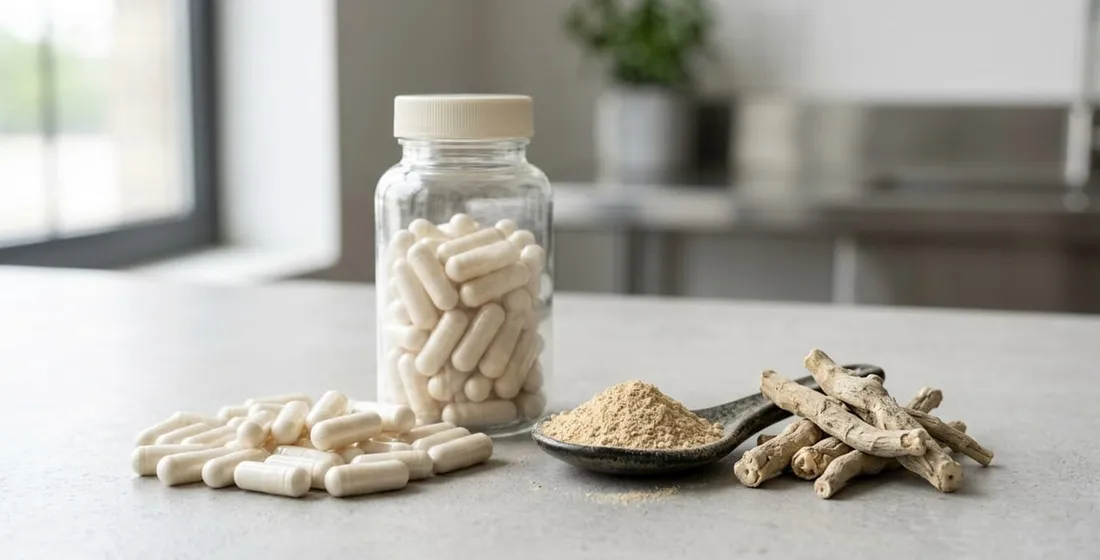
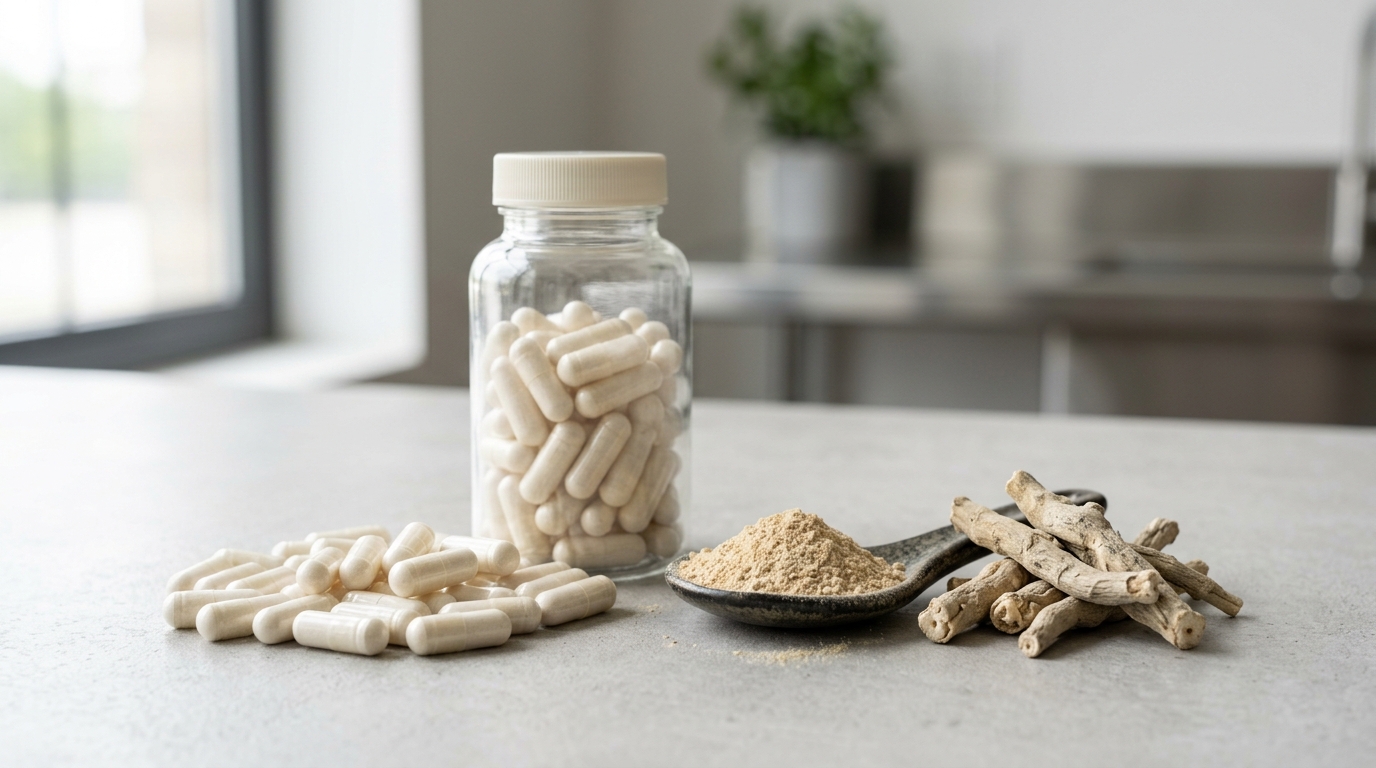
The capsule itself is a plain two-piece vegetable HPMC shell filled with milled botanical. What turns a generic capsule into a sellable retail SKU is the label, the packaging, and the paperwork behind the claim. A capsule that says only “herbal supplement” sits under the standard packaged-food regime. A capsule that says “ashwagandha for balance” or carries any traditional Ayurvedic positioning crosses into a second regulatory track entirely.
Why two registrations, not one?
Most packaged foods in Sri Lanka need one regulatory pathway: SLSI clearance for shelf eligibility, and Sri Lanka Food Act 1980 compliance for the label. An Ayurvedic-claim capsule needs both of those plus a third: registration under the Department of Ayurveda.
The Department of Ayurveda, operating under the Ayurveda Act No. 31 of 1961 (amended in 2023), handles first-time registration and renewal for locally manufactured Ayurvedic drugs and products, and asks for a professional opinion from a registered Ayurveda practitioner on locally made products (Department of Ayurveda, 2025). In practice this is the gate that lets a label legally make a traditional claim. Skip it, and the SKU either drops the Ayurvedic positioning, which usually defeats the point of the gift-shop programme, or risks a label that cannot stand.
Why this matters
The failure mode is not the SLSI submission. It is a brand owner who plans the SLSI timeline, prints labels carrying an Ayurvedic claim, and only then discovers the Department of Ayurveda track was never started. By then the label artwork is committed and the shelf date is gone.
The herbal segment is not a niche worth half-treating. Ayurvedic and herbal positioning now drives the larger share of a global ayurvedic health and personal-care market valued at roughly USD 5.8 billion in 2024 (market research aggregated by Grand View Research, 2025), and Sri Lanka markets Ayurvedic and herbal products as a distinct export category through the Sri Lanka Export Development Board. The claim is the asset. The registration protects it.
SLSI and Department of Ayurveda: what each track covers
The two registrations answer different questions. One asks “is this packaged product safe and standard-compliant for a retail shelf.” The other asks “is this Ayurvedic claim legitimate and the product registered as an Ayurvedic preparation.” A capsule SKU with a traditional claim needs both.
| SLSI clearance | Department of Ayurveda registration | |
|---|---|---|
| Governing framework | Sri Lankan Standards / SLS Mark scheme, under the Sri Lanka Food Act 1980 | Ayurveda Act No. 31 of 1961 (amended 2023) |
| What it covers | Product safety, packaging, label compliance for a retail shelf | Legitimacy of the Ayurvedic claim and registration as an Ayurvedic product |
| When you need it | Every packaged retail SKU | Only SKUs carrying an Ayurvedic or traditional claim |
| Key submission input | Formulation, test reports, label artwork | Formulation, herb source, claim language, practitioner opinion |
| What it unlocks | Eligibility for supermarket, marketplace, and HORECA retail | Legal right to use the Ayurvedic claim on the label |
| Typical window | 4 to 8 weeks for a stable formulation | Varies by category and completeness of the dossier |
The practical rule: treat them as parallel tracks with a shared shelf date, not as a queue. The slower track, usually whichever has the more demanding dossier, is the one that sets the launch.
How to run the two tracks in parallel
Sequencing is where a programme either holds its shelf date or slips a quarter. The order that works:
- Lock the formulation first. Both registrations ask for the formulation, the herb source, and the test data. Locking the recipe before either submission means you file once, not twice.
- Start both submissions in the same week. The SLSI dossier and the Department of Ayurveda dossier share most of their inputs. Filing them together, rather than waiting for SLSI to clear before starting Ayurveda, is the single biggest timeline saving.
- Draft the label against the claim you are registering, not the claim you hope to make. Label artwork should follow the registered claim language. Printing artwork before the Ayurveda track confirms the wording is how brands end up reprinting.
- Plan a six to ten week buffer between QA sign-off and the target shelf date. SLSI’s packaged-food window runs four to eight weeks for a stable formulation; the Ayurveda dossier varies. The buffer absorbs whichever track runs long.
One local wellness brand at the Matale facility scaled from a 180-bottle pilot of an ashwagandha capsule in 2024 to a multi-SKU monthly programme by early 2026. The unlock was not price. It was that the same cert stack and the same registration approach covered the next three botanical SKUs without restarting the manufacturer audit, so each new gift-shop line shipped on the formulation-lock-to-shelf timeline rather than a fresh regulatory cycle.
Service snapshot: Private Labelling at Silk Foods Ceylon
- Service: SFC-formulated capsule SKU relabelled under the buyer’s brand
- First-run MOQ: 180 bottles per capsule SKU
- Catalogue: 50+ ready-to-go SKUs, including botanical and Ayurvedic-claim capsules
- Cert coverage: BRCGS- and FSSC 22000 V6-audited, with SLSI clearance and Department of Ayurveda registration on relevant capsule SKUs
- Registration support: SLSI and Ayurveda Department submissions handled inside the engagement
What a hotel gift-shop or spa capsule programme needs
For a hotel group, the appeal of a capsule SKU is the shelf margin and the wellness story that ties to the spa. The procurement criteria are narrow: a believable MOQ, a manufacturer with the right audit chain, and registration support so the property is not left managing two government submissions on its own.
The 180-bottle first-run MOQ is structured for exactly this. A property can launch a two or three SKU wellness shelf, ashwagandha, triphala, and one Sinhala-named botanical, on a single production block and a single manufacturer audit. Because Hapugasyaya sits in the spice-and-herb belt of Matale district, raw-material sourcing for the botanical fill runs on a same-week turnaround when a new batch is ordered locally, which keeps the R&D and sampling loop short for a property that wants to taste-test and approve in person.
FAQ
Does a private-label Ayurvedic capsule need Department of Ayurveda registration as well as SLSI?
Yes, if the label carries an Ayurvedic or traditional claim. SLSI clearance covers the packaged product for the retail shelf; Department of Ayurveda registration, under the Ayurveda Act No. 31 of 1961 (amended 2023), covers the legitimacy of the Ayurvedic claim itself. A capsule sold only as a generic “herbal supplement” may need just the SLSI track.
What is the private-label MOQ for Ayurvedic capsules at Silk Foods Ceylon?
The first-run MOQ is 180 bottles per capsule SKU. That figure is structured for a brand or hotel group ready to commit to a first commercial run from the 50+ product catalogue, which lets a property launch a two or three SKU wellness shelf on a single production block and one manufacturer audit.
Can Silk Foods Ceylon handle both the SLSI and Ayurveda Department submissions?
Yes. SLSI clearance and Department of Ayurveda registration support sit inside a standard private-label engagement at the Matale facility, which is BRCGS- and FSSC 22000 V6-audited with SLSI clearance on every retail SKU. The two registrations are filed as parallel tracks against a shared shelf date.
How long does it take to get an Ayurvedic capsule onto a hotel gift-shop shelf?
Plan a six to ten week buffer between QA sign-off and the target shelf date. SLSI’s packaged-food window runs four to eight weeks for a stable formulation; the Department of Ayurveda dossier varies by category. Locking the formulation first and filing both submissions in the same week is what holds the date.
How Silk Foods Ceylon can help
For hotel and restaurant groups running spa, gift-shop, or in-room wellness SKU programmes, Silk Foods Ceylon (SFC) offers a private-label catalogue of 50+ ready-to-go products, including botanical and Ayurvedic-claim capsules. Custom branding is applied to existing SFC formulations; the first-run MOQ sits at 180 bottles per capsule SKU, which keeps a multi-SKU wellness shelf on a single production block. The Matale facility is BRCGS- and FSSC 22000 V6-audited, with SLSI clearance and Department of Ayurveda registration support on relevant capsule SKUs built into the engagement.
To brief an Ayurvedic capsule or gift-shop programme, email b2b@esilkroute.com.lk or call +94 76 441 0389 / +94 76 918 5744.
Sources
Sources
- Parliament of Sri Lanka, Ayurveda (Amendment) Act, No. 19 of 2023 (2023). https://www.parliament.lk/uploads/acts/gbills/english/6301.pdf (retrieved 13 June 2026)
- Department of Ayurveda, Regulation of Local Ayurveda Drugs / Products Registration (2025). https://ayurveda.gov.lk/docs/regulation-of-local-ayurveda-drugs-products-registration/ (retrieved 13 June 2026)
- Ayurveda Act (No. 31 of 1961), CommonLII. https://www.commonlii.org/lk/legis/num_act/aa31o1961156/ (retrieved 13 June 2026)
- Sri Lanka Standards Institution, SLS Mark Product Certification Scheme (2025). https://slsi.lk/ (retrieved 13 June 2026)
- Sri Lanka Export Development Board, Ayurvedic and Herbal Products from Sri Lanka. https://www.srilankabusiness.com/ayurvedic-and-herbal/ (retrieved 13 June 2026)
- Grand View Research, Ayurveda Market Size, Share & Growth Industry Report (2025). https://www.grandviewresearch.com/industry-analysis/ayurveda-market-report (retrieved 13 June 2026)
Written by the Silk Foods Ceylon Team. Silk Foods Ceylon (Pvt) Ltd. is a BRCGS- and FSSC 22000 V6-audited contract manufacturer in Matale, Sri Lanka, offering contract manufacturing, private labelling, co-packing, and in-house R&D for local Sri Lankan brand owners, FMCG companies, hotel and restaurant groups, and distributors. To brief a project: b2b@esilkroute.com.lk, +94 76 441 0389, or +94 76 918 5744.